
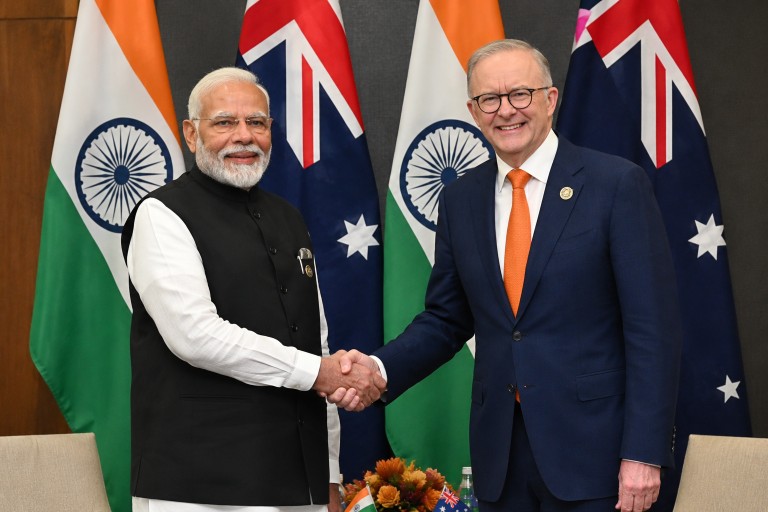
Indian Prime Minister Narendra Modi’s upcoming visit is seen as an effort to give new direction to India’s strategic relations with Australia. This visit is happening at a time when geopolitical activities in the Indo-Pacific region are changing rapidly. During the visit, special emphasis will be placed on promoting bilateral cooperation as well as strengthening trilateral coordination with Japan.
The agenda for this visit is likely to include regional security, economic cooperation, strengthening of supply chains, and advanced technology partnerships. Growing cooperation between India, Australia, and Japan in the Indo-Pacific region is considered crucial for ensuring regional stability and maritime security. The three countries are expanding partnerships in areas of defense cooperation, investment, advanced technology, and economic development.
In the changing global scenario, such cooperation can help maintain regional balance as well as create new economic opportunities. During the visit, discussions on critical minerals and new technologies are likely to take place. Australia is a major producer of several essential minerals, including lithium, while India is rapidly increasing its capacity in electric vehicles, battery manufacturing, and semiconductors. In this context, reliable mineral supply and technological cooperation between the two countries could gain new momentum.
Clean energy is likely to be another major theme of this visit. By increasing cooperation in green hydrogen, renewable energy, and modern energy technologies, both countries can strive to achieve energy security and sustainable development goals. Analysts believe that this visit will also give new strength to India’s Act East policy.
Growing cooperation with Australia, Japan, and other regional partners can further strengthen India’s strategic and economic role in the Indo-Pacific region. Thus, Modi’s visit will not only deepen relations between India and Australia but will also pave the way for broader regional cooperation.