
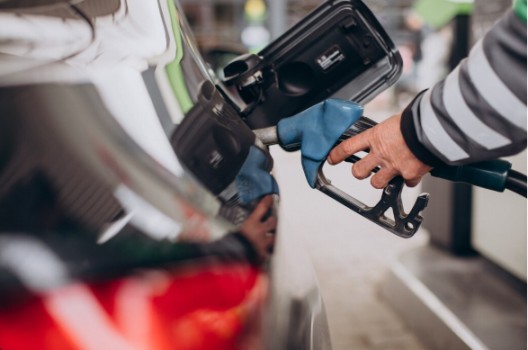
The central government has announced an increase in export duties on diesel and aviation turbine fuel (ATF) as part of a restructuring of its petroleum product tariff system. According to an official notification, diesel exports will now incur a fee of 14 rupees per liter, while ATF exports will face a charge of 12.5 rupees per liter. However, the export duties on petrol and the existing excise duties on petrol and diesel in the domestic market remain unchanged.
The revised duty rates became effective on Tuesday, as per the announcement by the Revenue Department. The government routinely reviews these duties based on the fluctuating conditions in the international energy markets. The latest adjustments reflect recent changes in the prices of crude oil and petroleum products globally.
Every 15 days, the special additional excise duty and other related cesses on petroleum products are reviewed. The previous adjustment in duty rates was implemented from June 1. Officials explained that duty assessments consider the average global prices of crude oil, diesel, petrol, and ATF, ensuring a balanced approach between domestic and export markets.
The Petroleum Ministry has assured that there is an adequate supply of petrol, diesel, LPG, and natural gas in the country. The ministry has emphasized that consumers should not worry about fuel availability. Additionally, it has appealed to both citizens and industries to use energy resources judiciously.
In a recent inter-ministerial press briefing, Joint Secretary Sujata Sharma highlighted the increased pressure on retail petrol pumps in certain areas due to rising demand. She noted that in May, a significant volume of diesel purchases shifted from wholesale or consumer pumps to retail outlets, impacting the distribution system. As a result, the government advised large industrial and commercial users to rely on consumer pumps for their needs. To ensure uninterrupted availability for general consumers, the government has temporarily capped diesel retail sales, allowing a maximum of 200 liters per person per day. This measure is set to last for approximately 90 days to stabilize the fuel distribution system and prevent inconvenience to the public. Officials have assured that refineries are operating normally and that there is no shortage of crude oil supply, dispelling fears of any potential fuel shortages.